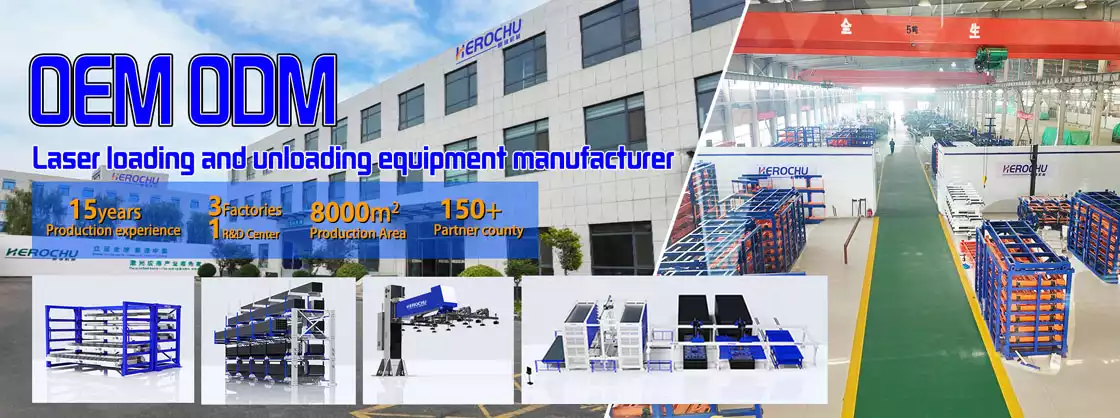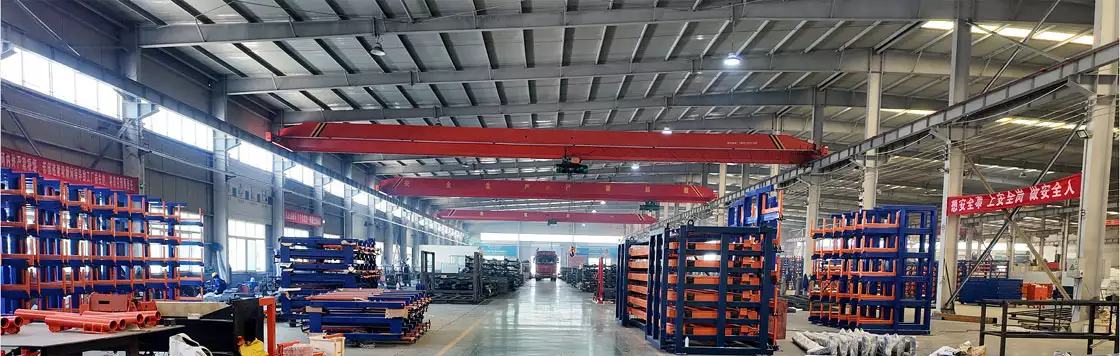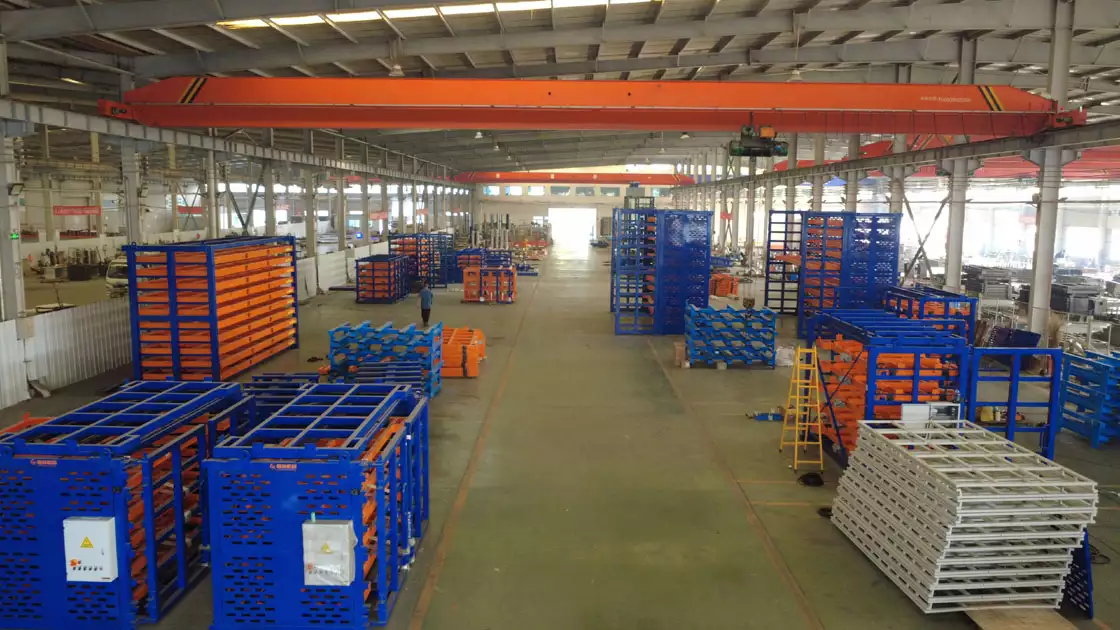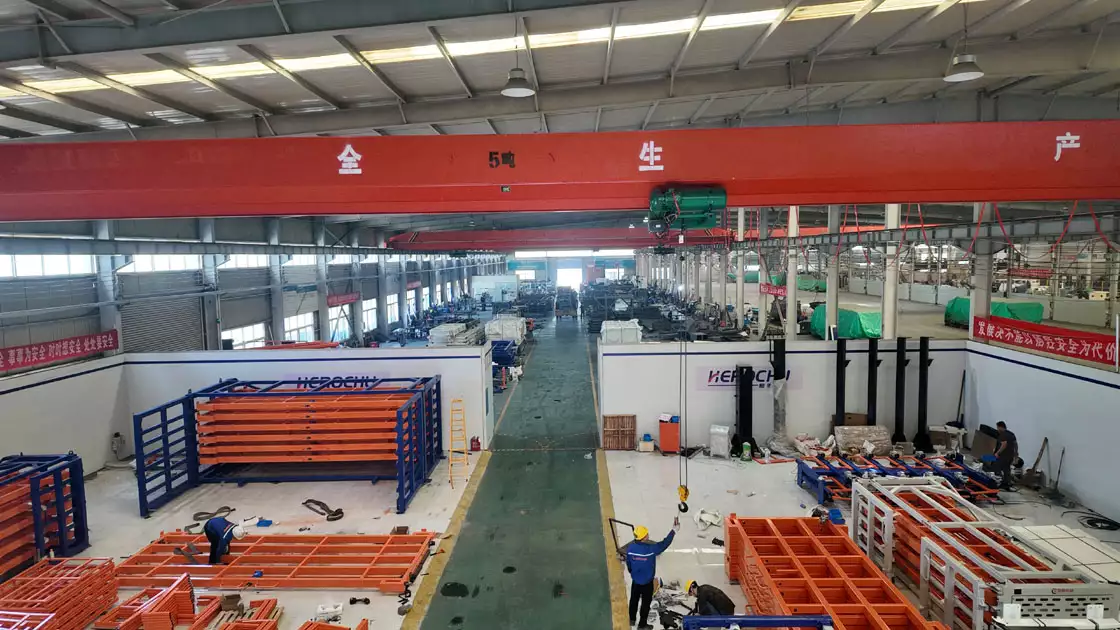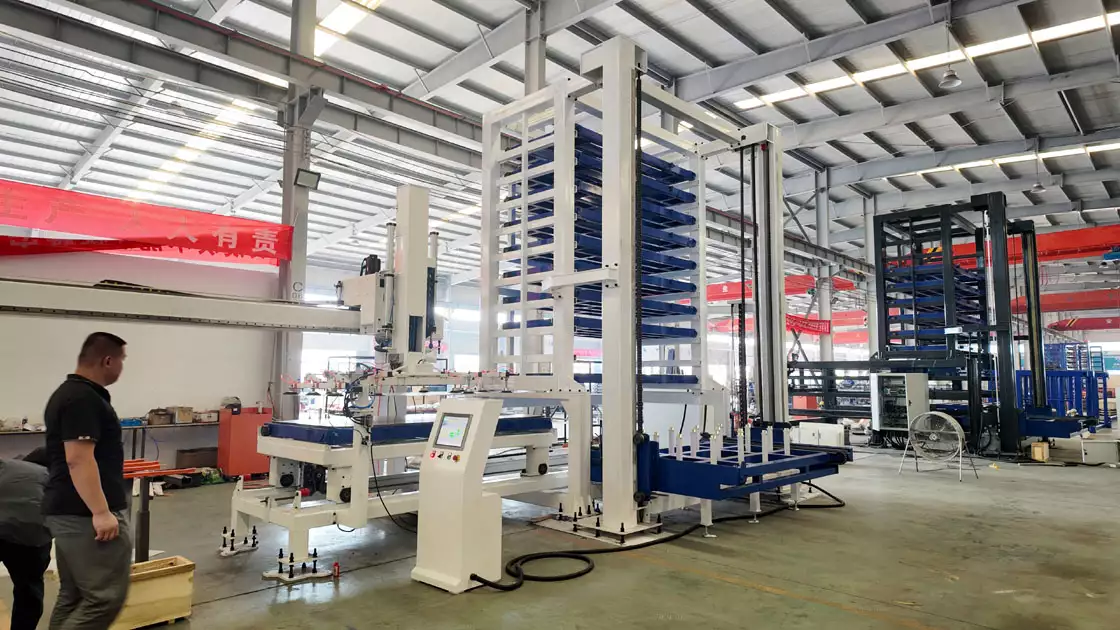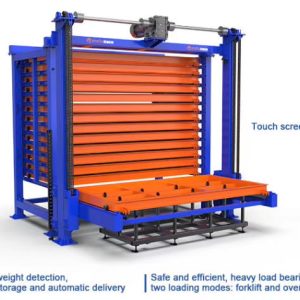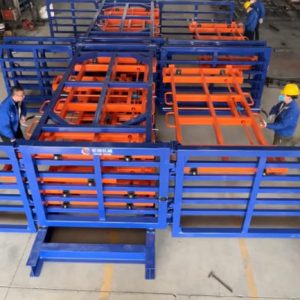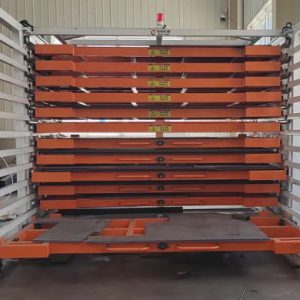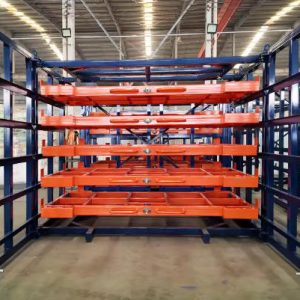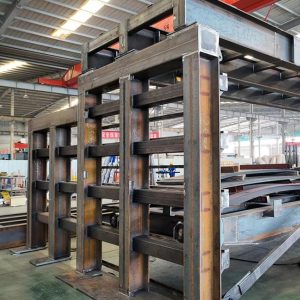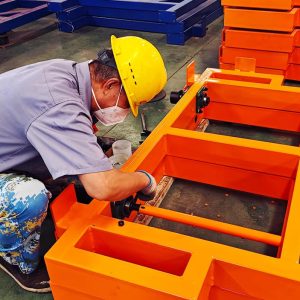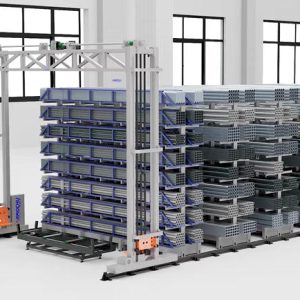
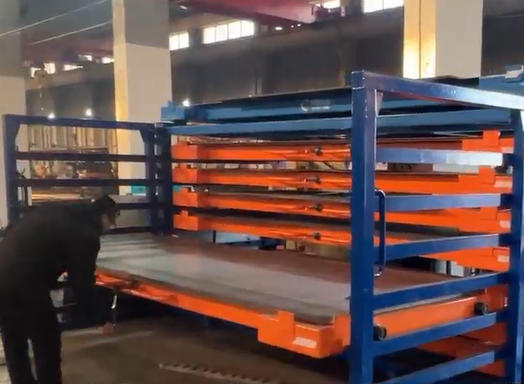
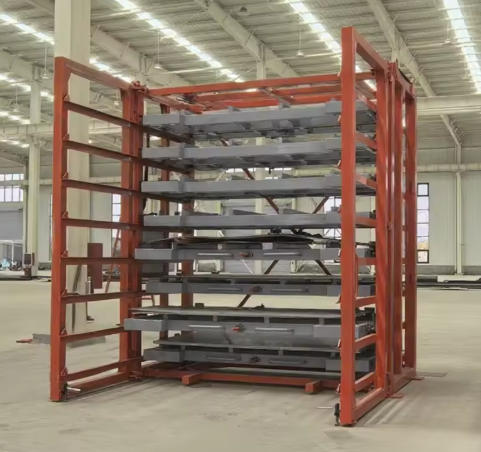
Your steel plates shouldn’t be a daily obstacle course. Every shop has that corner where material leans against the wall, getting scratched, buried, and eventually forgotten. That’s money tied up in inventory you can’t access efficiently. The Heavy Duty Drawer Rack system fixes this by treating plate storage as a functional workflow component, not a necessary evil. Starting with a 2-ton per layer baseline—though most configurations we ship handle 3 to 10 tons—this equipment fundamentally changes how quickly and safely your operators interact with raw stock.
The Core Problem with Conventional Storage
Block stacking plates saves initial cost but creates ongoing friction. A fabricator needing a 6mm plate from the bottom of a three-ton stack faces a no-win choice: either restack everything by hand or call for a forklift and risk damaging the top layers. Cantilever racks improve access but require wide aisles and still demand equipment for anything above the first few feet. Both approaches share a common failure: they treat material retrieval as a separate process from storage.
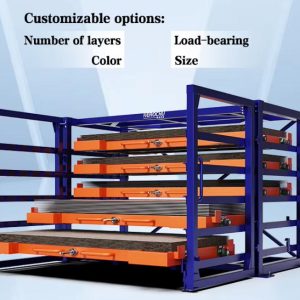
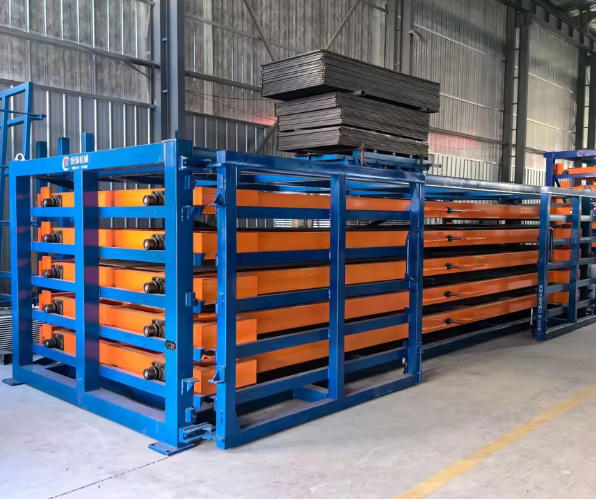
The drawer rack merges these functions. Each layer becomes a mobile platform that extends to present material at an ergonomic height. No restacking. No equipment staging. No guessing which pile holds the grade you need.
Model Specifications That Match Actual Workshop Requirements
The specification sheet includes four standard builds, but “standard” only means these are the configurations most commonly ordered. The real work happens when we adapt these baselines to your specific plate inventory.
HC-B3015-63: The Entry Point That Isn’t Basic
- 3-ton capacity per drawer
- 3,000mm × 1,500mm usable deck
- Six layers in a 3,505mm × 2,280mm × 2,000mm envelope
- This model fits under most mezzanines and services shops where the heaviest single plate runs 8mm-12mm thick. The 2,000mm height allows operators to see the top layer without stepping back.
HC-B4015-65: The Volume Workhorse
- 5-ton capacity handles multiple plates per drawer
- 4,000mm × 1,500mm deck matches European standard sheet dimensions
- Footprint of 4,505mm × 2,280mm × 2,000mm
- We see this in mid-volume fabricators running 5-10 jobs daily. The extra meter of length stores offcuts efficiently, keeping usable remnants organized rather than scattered across the shop floor.
HC-B4020-68: The Heavy Gauge Specialist
- 8-ton capacity per drawer for substantial individual plates
- 4,000mm × 2,000mm deck accommodates wider stock
- 4,505mm × 2,280mm × 2,500mm overall height
- The 2,500mm height adds a seventh layer option for shops with 4-meter ceilings. This model frequently ships to ship repair facilities and heavy equipment rebuilders who store 20mm-40mm plate.
HC-B6020-610: The Maximum Capacity Platform
- 10-ton capacity per drawer
- 6,000mm × 2,000mm deck handles full-length structural plate
- 6,505mm × 2,280mm × 2,500mm footprint
- Primary steel distributors use this near slitting and cut-to-length lines. The 2,280mm depth keeps aisle width consistent across multiple units, simplifying traffic flow for side-loaders and overhead cranes.
Customization Based on Material Reality, Not Catalog Options
The customization discussion starts with a simple question: What are the three thickest plates you stock, and how many pieces of your thinnest gauge fit in one stack? The answer determines layer spacing. A shop storing 50mm wear plate and 1.5mm sheet metal can’t use uniform spacing efficiently. We adjust vertical dimensions per layer, creating a profile that mirrors your inventory mix.
Load bearing customization runs deeper than the tonnage rating. Ten tons of 2-meter plate concentrates differently than ten tons of 6-meter plate. We calculate deflection at full extension and add intermediate support rollers where needed. For clients storing stainless steel—where surface finish matters—we upgrade roller material to non-marring polyurethane and increase roller count to reduce contact pressure.
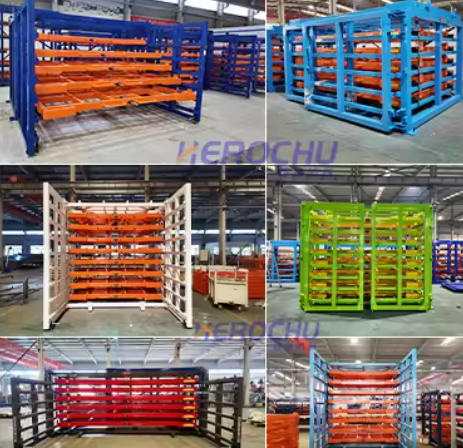
Sizing customization means adding 500mm to your maximum plate length and width. If your longest part is 4,200mm, we build a 4,700mm drawer. This isn’t upselling; it’s practical handling space. Your operators need room for slings, hooks, and the inevitable slightly-oversized delivery that would otherwise require a separate storage location.
Height customization maximizes vertical cube. We measure from floor to the lowest obstruction—crane rail, sprinkler, beam—and subtract 200mm for safe clearance. In a 7-meter-high bay, this often yields eight layers instead of six, adding 33% capacity in the same footprint.
Safety Engineering That Prevents Incidents Before They Occur
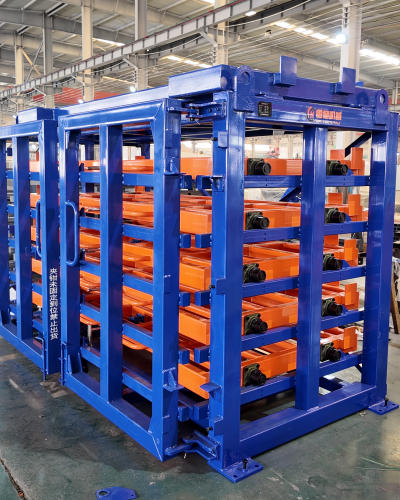
The maximum load sign isn’t a decal. It’s a laser-etched stainless steel plate riveted to each drawer face. It shows the distributed load limit and a QR code linking to the specific load placement diagram. Operators can’t claim they didn’t know the capacity—it stares them in the face every time they pull the drawer.
Anti-pinch design uses a physical gap, not electronics. Twenty-five millimeters of clearance between drawer and frame with recessed roller trucks means hands get pushed aside, not crushed. For facilities with rigid safety protocols, we integrate a mechanical pressure brake: if the drawer meets resistance at 50 newtons of force, a cam disengages the drive, stopping motion instantly. No sensors to fail, no software to glitch—pure mechanical reliability.
Organization and Workflow Integration
The label system seems trivial until you multiply the time spent opening drawers to check contents. Each drawer face includes a polycarbonate sleeve sized for A5 paper. Insert a card showing grade, thickness, heat number, project assignment, or customer name. A shop running 50 active jobs can color-code these by priority or delivery date. Visual management at this level reduces retrieval errors and prevents the “I’ll just grab a piece from this stack” mentality that throws inventory accuracy out the window.
Lifting system integration turns the rack into a crane-fed staging area. Pre-drilled lifting lug locations every 500mm along the top beam support vacuum lifters, magnetic beams, or mechanical grabs. The extended drawer positions the plate directly under the crane hook, eliminating floor buffering. A service center in the Netherlands paired four racks with an overhead crane, cutting material flow time from storage to cut table by 70%.
The ladder truck addresses top-layer access without compromising safety. Generic step ladders slip on oily concrete and create falling hazards. Our mobile platform locks into receiver tubes welded to the rack base, creating a stable working surface at the exact height of the highest drawer. The platform includes a tool tray positioned at waist height, so operators aren’t climbing with calipers or markers in hand.
Performance Data from Actual Installations
A structural steel fabricator in Manchester replaced their block storage with two HC-B4020-68 units. Their metrics before and after tell the story:
- Material retrieval: 14 minutes average to 2.5 minutes
- Personnel required: Two operators per retrieval to one
- Damage rate: 4.2% of plates scratched or dented to 0.3%
- Inventory accuracy: 78% to 96%
The system paid for itself in nine months through labor savings alone.
A ship repair facility in Hamburg stores 6-meter plate up to 30mm thick in HC-B6020-610 racks. The 10-ton capacity handles individual plates, while custom 400mm layer spacing fits their thinnest stock efficiently. The crane integration allows direct transfer to their plasma table, eliminating a dedicated material handler position. Annual savings: €42,000 in labor plus €18,000 in damage reduction.
Installation and Floor Requirements
The rack anchors to existing concrete using M16 chemical studs. Required floor thickness: 150mm minimum with 25MPa compressive strength. We provide laser-cut drilling templates; installation takes four hours with two technicians and a hammer drill. For leased facilities where floor penetrations are prohibited, optional 300mm × 300mm base plates distribute load across a larger area, reducing point loading from 5 tons to 1.4 tons per anchor point.
The 2,280mm depth is intentional. It matches the width of most side-loading forklifts and keeps aisles at a standard 3,600mm width—enough for equipment passage without wasting space. When multiple units line up, the consistent depth creates a uniform wall of storage that operators can navigate predictably.
The Business Case in Plain Numbers
Assume your shop retrieves plate 15 times daily across two shifts. At 12 minutes per retrieval using traditional methods, that’s three hours of labor. At €50/hour fully loaded cost, you spend €150 daily, €39,000 annually.
With drawer racks: retrieval drops to 2 minutes. Daily labor cost becomes €25. Annual spend: €6,500. Savings: €32,500 per year. The €5,500 base configuration pays back in 10 weeks.
Add material loss reduction. If you lose 3% of plate to handling damage on a €150,000 annual spend, that’s €4,500 wasted. Drawer systems cut this to under 0.5%—a €3,750 savings. Combined with labor, first-year benefit approaches €36,000 on a €5,500 investment.
Specification Summary
| Model | Capacity/Layer | Plate Size | Standard Layers | Overall Dimensions (L×W×H) |
|---|---|---|---|---|
| HC-B3015-63 | 3 tons | 3×1.5m | 6 (custom) | 3505×2280×2000mm |
| HC-B4015-65 | 5 tons | 4×1.5m | 6 (custom) | 4505×2280×2000mm |
| HC-B4020-68 | 8 tons | 4×2m | 6 (custom) | 4505×2280×2500mm |
| HC-B6020-610 | 10 tons | 6×2m | 6 (custom) | 6505×2280×2500mm |
Customization options include layer count, load distribution, dimensional adjustments, safety features, labeling, and integration with lifting equipment.
Final Word
The 2-ton capacity baseline is a starting point. Most facilities quickly realize they need more, which is why our standard line begins at 3 tons. The key is matching the equipment to your actual material flow, not your idealized layout. We engineer these racks around the messy reality of daily shop operations: the odd-length plate that shows up unannounced, the operator who needs quick access without waiting for a forklift, the floor space that’s too valuable for static storage.
This system works because it treats steel plate as valuable inventory worth protecting and organizing. The drawer mechanism isn’t a gimmick—it’s a practical solution to a daily problem faced by every fabricator and steel distributor.
Contact our team with your maximum plate dimensions, heaviest single piece, and available ceiling height. We’ll configure a system that stores your material efficiently and makes it genuinely accessible. Standard models ship in 5-7 days; custom configurations deliver in 4-6 weeks with full installation support.